
BPC-157 is one of the most extensively researched peptides in the field of regenerative science.
It is documented effects across tissue repair, wound healing, gastrointestinal protection, and angiogenesis have made it a compound of significant interest to researchers, practitioners, and individuals pursuing health optimisation.
As its profile has grown, so has the range of ways in which it is being marketed and used.
One area where clarity matters enormously is the difference between BPC-157 oral and subcutaneous injectable forms.
Both are legitimate research formats and both have genuine applications. The problem arises when the benefits documented for one format are attributed wholesale to the other, leaving researchers and users with an incomplete or inaccurate picture of what to expect from their protocol.
The core distinction is straightforward as BPC-157 oral administration is most mechanistically coherent when the gastrointestinal tract is the target.
Subcutaneous injection is the format most supported by the literature for systemic effects including musculoskeletal repair, soft tissue regeneration, and broader tissue healing.
BPC-157 (Body Protection Compound 157) is a synthetic pentadecapeptide, a 15-amino-acid sequence derived from a protein found naturally in human gastric juice.
Its origins in the gastric environment are directly relevant to understanding its oral stability, because BPC-157 is consistently described in the scientific literature as a stable gastric pentadecapeptide, one that maintains its integrity in human gastric juice for over 24 hours.
This is significant because most peptides are broken down by the digestive system before they can exert meaningful biological effects.
BPC-157 oral administration is viable precisely because the peptide can survive gastric conditions long enough to interact with the gastrointestinal tract directly.
This gastric stability is one of the defining properties of BPC-157 and the central reason oral use has drawn sustained research interest.
A review by Sikiric et al. documented BPC-157‘s stability in human gastric juice for more than 24 hours and highlighted its effectiveness in gastrointestinal models, including via oral administration.
The combination of gastric stability and GI-directed biological activity is a large part of why BPC-157 oral use has attracted specific attention in digestive research.
When BPC-157 oral is taken, the peptide passes through the gastrointestinal tract, where it can interact directly with the mucosal lining, epithelial tissue, and the broader GI environment.
The research literature describes BPC-157 as active across both the upper and lower GI tract, with documented relevance to cytoprotection, mucosal barrier support, and tissue repair within the gastrointestinal environment.
For this reason, BPC-157 oral is the mechanistically coherent format when the goal is gut-focused. The site of interest is the gastrointestinal tract itself, and oral administration places BPC-157 directly at that site.
Rather than relying on systemic distribution to reach the gut from a peripheral injection point, BPC-157 oral delivery achieves direct local contact with the tissue being targeted.
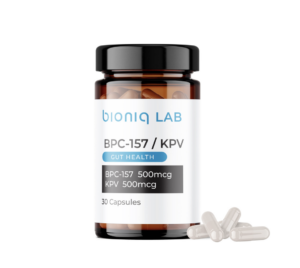
While BPC-157 oral administration is mechanistically well-suited to gut-focused research, the majority of BPC-157‘s broader research literature, covering musculoskeletal repair, soft tissue regeneration, tendon and ligament healing, and wound healing across non-GI tissue, has been conducted using subcutaneous or intramuscular injection.
This reflects the systemic distribution that injection provides and the direct proximity to the target tissue that localised injection can achieve.
When BPC-157 is administered subcutaneously, it enters systemic circulation and distributes to tissues throughout the body.
This systemic availability is what supports the broader range of documented effects: the angiogenesis, the collagen synthesis, the nitric oxide pathway modulation, and the growth factor upregulation that have made BPC-157 one of the most studied compounds in regenerative medicine research.
→ You can read the full study here
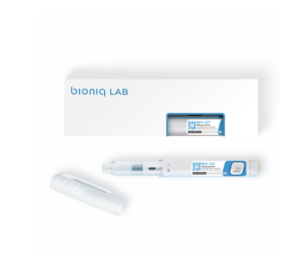
BPC-157 oral administration delivers the peptide directly to the gastrointestinal tract, where it can interact locally with the mucosal lining, epithelial tissue, and GI immune environment.
Injectable BPC-157 enters systemic circulation and distributes throughout the body, reaching non-GI tissues including muscle, tendon, ligament, skin, and nervous tissue. The site of action follows directly from the route of administration.
The large majority of BPC-157‘s published research on musculoskeletal repair, soft tissue healing, and systemic regenerative effects has been conducted using injectable administration.
The evidence base for BPC-157 oral use is most robust in the context of gastrointestinal models. Attributing the injectable literature’s findings to oral administration overstates what the evidence actually supports.
BPC-157‘s gastric stability means BPC-157 oral administration is viable in a way that is not true of most peptides. However, the extent to which orally administered BPC-157 achieves meaningful systemic distribution beyond the GI tract remains less well-characterised than the systemic bioavailability achieved through subcutaneous injection.
For goals that require the peptide to reach non-GI tissue, injectable administration provides a more established delivery pathway.
Choosing between BPC-157 oral and injectable formats is not simply a matter of convenience. It is a protocol design decision that should be driven by the target tissue or system. A protocol designed to support gut mucosal repair is appropriately centred on oral administration.
A protocol targeting tendon recovery, muscle repair, or systemic tissue regeneration is more appropriately built around subcutaneous injection. Matching the format to the goal is one of the most important and most frequently overlooked decisions in BPC-157 research.
BPC-157 oral products are frequently marketed with benefit lists that draw from the injectable literature: muscle recovery, tendon repair, soft tissue regeneration. These are real and well-documented effects of BPC-157, but they are primarily supported by research conducted using injectable administration. Presenting these benefits as equally applicable to oral use without qualification misrepresents the evidence. The gut-focused benefits of BPC-157 oral are genuinely compelling and well-supported.
They do not need to be supplemented with claims the route of administration does not clearly support.
The distinction between BPC-157 oral and injectable administration is one example of a broader principle. In Peptide Therapy, the format, the dose, and the protocol matter as much as the compound itself.
Getting these decisions right from the start produces better outcomes and avoids the frustration of a protocol that is not aligned with the goal it was designed to address.
If you’re unsure as to where to start with a BPC-157 protocol, you can schedule a one-to-one consultation with one of our Peptide Therapy specialists who can help you identify the right format for your specific research or health goals, design a protocol grounded in the evidence, and navigate the BPC-157 literature with confidence.
Schedule your tailored consultation today
For gut-focused goals, BPC-157 oral administration is mechanistically well-supported and delivers the peptide directly to the target tissue. For systemic goals including musculoskeletal repair and soft tissue regeneration, injectable administration has a stronger and more comprehensive evidence base. Effectiveness depends on matching the format to the specific goal.
BPC-157 is described in the scientific literature as a stable gastric pentadecapeptide, meaning it maintains its structural integrity in human gastric juice for extended periods. This gastric stability sets BPC-157 apart from most peptides, which are broken down by digestive enzymes before they can exert meaningful biological effects. This stability is the biological basis for BPC-157 oral administration being a viable research format.
BPC-157 oral is most mechanistically coherent for gastrointestinal research. This includes gut mucosal healing, cytoprotection of the gastric and intestinal lining, barrier function support, and the exploration of BPC-157‘s anti-inflammatory effects within the GI environment. The oral format places the peptide directly at the site of interest, which is a meaningful advantage when the gut is the target.
The muscle recovery and soft tissue repair benefits most commonly associated with BPC-157 are primarily documented in research using injectable administration. While BPC-157 oral administration may offer some systemic distribution, the evidence base for muscle-specific benefits is most robustly supported by subcutaneous injection research. For muscle recovery as a primary goal, injectable administration is the more evidence-aligned format.
Some researchers combine BPC-157 oral and injectable administration to address both gut-focused and systemic goals simultaneously. Whether this combination is appropriate for a specific individual’s goals and health profile is a question best addressed in consultation with an experienced practitioner who can design a protocol that accounts for both objectives.
The route of administration determines where in the body BPC-157 is most active and what evidence base is most relevant to the expected outcomes. Using the wrong format for the goal means the protocol is not aligned with the literature that supports the expected benefits. Matching the route of administration to the target tissue is one of the most important and most frequently overlooked aspects of BPC-157 protocol design.
DN Lab Research offers BPC-157 in both formats. For gut-focused research: BPC-157/KPV Blend. For systemic and musculoskeletal research: BPC-157 15mg Peptide Pen.
Written by Elizabeth Sogeke, BSc Genetics, MPH
Elizabeth is a science and medical writer specialising in peptide science, longevity medicine, mitochondrial health, metabolic optimisation and regenerative health research. With a BSc in Genetics and a Master’s in Public Health, she combines a strong scientific foundation with experience translating complex biomedical research into clear, clinically informed education for the Peptide Therapy and longevity medicine space. Her work is centred on interpreting emerging peptide, metabolic and longevity research with scientific accuracy, clinical awareness and a clear understanding of how these therapies are being discussed and applied in modern health optimisation.