
When comparing peptide compounds within research, you may wonder what is the difference between peptide pens and vials, even though they are labelled as containing the same compound,
The main difference is how the material is supplied, prepared and measured for research.
A vial is a container that may hold dry peptide or a liquid solution.
A pen combines a container with a measuring system and usually holds prepared liquid.
Some devices mix dry material with liquid inside the system, so the product details are still important.
Neither determines peptide quality.
The compound information should explain the physical form, concentration, storage conditions and batch documentation.
A peptide vial is typically a small container with a sealed closure.
It may contain lyophilised material, which means the peptide has been freeze dried, or it may contain a liquid solution.
The word vial describes the container, so the label must explain what is inside.
A peptide pen contains a reservoir or cartridge inside a device.
The device uses a defined metering mechanism to deliver liquid according to its available settings.
Some pens have one fixed setting, while others offer several settings.
In practice, a dry vial usually needs a suitable liquid and separate measurement.
A prepared pen brings the liquid and measuring mechanism together, reducing the number of preparation steps.
Vials can offer flexibility when a study needs a chosen concentration or separate samples, provided the research method supports the preparation.
Pens work within the concentration and settings of the device.
Both still require clear records.
For vials, this includes the liquid, final volume, concentration and preparation time.
For pens, it includes the device model, selected setting and stated concentration.
Batch and storage details are still important for both.
Peptide Pen | Peptide Vial |
Pre-measured dosing | Requires reconstitution |
Ready to use | Multiple preparation steps |
Less handling | More handling |
Often multidose | Often multidose after mixing |
A peptide vial can contain dry material or prepared liquid, so it is worth checking the compound description before making assumptions about the format.
Lyophilised material has been freeze dried.
During this process, the original solution is frozen and most of its water is removed under low pressure.
What remains may look like a small cake, a thin film or a tiny amount of powder at the bottom of the vial.
A small amount of dry peptide can be difficult to see when no bulking ingredients have been added.
The label and batch documents provide the information that matters.
A solution vial already contains the peptide in liquid. There is no separate need to dissolve dry material, although the concentration and storage information still need to be clear.
Freeze drying is often used because removing water can help many sensitive molecules remain stable during storage.
A 2018 review explained how freezing and freeze drying are used with proteins and peptides.
The review also makes an important point that stability depends on the complete preparation, not the drying process alone.
The ingredients around the peptide can be significant as well.
A 2020 review looked at excipients used in freeze dried biological products.
Excipients are supporting ingredients that may help with shape, stability or acidity.
This is why a dry vial may contain the named peptide alongside a buffer, stabiliser or bulking ingredient.
A dry peptide needs to be dissolved before it can be used as a liquid laboratory sample.
This process is called reconstitution.
The liquid dissolves the material and helps establish its final concentration.
Concentration tells you how much peptide is present in a particular volume of liquid.
If the same amount of dry material is mixed with two different volumes, the two solutions will not have the same concentration.
This is why the final volume needs to be recorded as part of the research method.
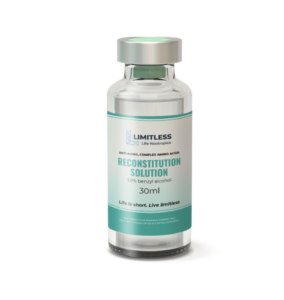
Bacteriostatic water is one option that is common in discussions about reconstitution.
This description explains what bacteriostatic water is. It does not determine which liquid is suitable for a particular research material.
Bacteriostatic water is not the only possible liquid, and it is not automatically the correct choice for every peptide.
Some research also uses reconstitution solution, sterile water,saline or a particular buffered solution.
A buffer is a mixture that helps keep acidity within a chosen range.
You can learn more about the difference between all of these options for reconstitution in our article here which explores the different types of solvent selection for peptide reconstitution.
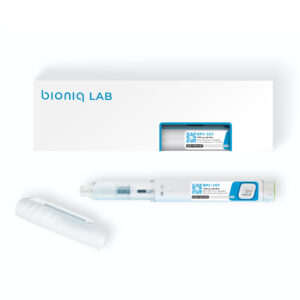
A peptide pen brings the liquid container and measuring mechanism together in one format.
The liquid sits inside a reservoir or cartridge, while the device moves a set volume when a setting is selected.
There are different types of peptide pens..
Some are supplied as complete disposable systems. Others are reusable and take replacement cartridges.
A pen may offer one fixed setting or a choice of settings, depending on its design.
For research, one practical feature is the defined measuring mechanism.
When the liquid has already been prepared at a stated concentration, there are fewer separate steps to record before each experiment.
The settings can provide a defined measuring system when their relationship with the delivered volume and formulation concentration is clearly documented.
This does not mean that every pen setting represents the same amount.
The total contents, concentration and volume moved by each setting still need to be known.
These details can change from one product to another, even when the pens look similar.
A numbered setting or unit on one pen should not be assumed to represent the same amount on another.
Its meaning depends on the product, concentration and device.
The product information should explain what the setting means and how much liquid it delivers.
To understand what a setting represents, you need two pieces of information.
The first is the volume delivered by the device. The second is the concentration of the liquid inside it.
Together, these details can be used to determine the nominal amount of peptide associated with a particular setting.
This is why the settings from one pen should not be applied to another.
A pen with a different concentration or measuring mechanism may give a different amount at the same numbered setting.
The same principle appears in official guidance for approved products.
In its 2013 guidance the US Food and Drug Administration (FDA) explains that a pen system should be assessed together with the liquid product it is designed to deliver.
This includes checking the relationship between the settings on the device and the amount or volume delivered.
The guidance covers regulated products, but it helps explain why a pen and its liquid need to be understood together.
A pen can make measurement simpler because it uses a defined metering mechanism with available settings.
It can also reduce the number of separate preparation stages when the liquid is already inside the reservoir.
This can be useful when a research protocol needs the same measurement to be repeated in a consistent way.
A vial still does offer control. . Researchers can prepare a concentration that suits the experiment, as long as the product documents and method support it.
They can also use laboratory equipment selected for the volume they need to measure.
It would be inaccurate to say that every pen is more precise than every vial method.
Accuracy depends on the pen design, concentration, available settings and testing behind the device.
For a vial, it depends on the final concentration and the equipment used to measure the solution.
A 2024 laboratory study tested the incremental settings used by a particular family of fertility pen injectors.
The study found that the tested devices delivered accurate amounts across the settings examined.
These findings apply to those specific devices and show why the performance of one pen should not be assumed for every pen system.
There is no single answer that applies to every peptide.
Dry and liquid products behave differently, but the container alone does not decide how long the material remains stable.
Removing water can slow some forms of chemical change, which is one reason freeze drying is commonly used.
Once a peptide is dissolved, the liquid environment can allow chemical or physical changes to take place more easily.
The actual stability depends on the peptide, concentration, acidity, supporting ingredients, container and storage conditions.
A liquid formula can still remain stable for its stated period when testing supports it.
Temperature, light, oxygen and acidity can all affect stability.
The vial, cartridge and any other component touching the formulation may matter too.
Some peptides can adsorb to a surface, which means some molecules stick to the container instead of remaining in the liquid.
As these factors differ between peptides, there is no reliable shelf life that can be given to every vial or every pen.
The stated storage period should come from information for the exact product and formulation.
However, as a generalisation, peptide pens tend to have a longer shelf life, with many ranging from 1-2 years as opposed to vials which can have shelf life of 3 months after reconstitution.
The better format depends on what the research needs.
Vials may suit work that requires a chosen dilution, separate samples or flexible laboratory measurement.
Pens may suit work that benefits from prepared liquid and a set measuring system, flexibility and a longer shelf life.
A useful comparison should look at the physical form, concentration, device settings, storage information and batch documents.
These details say far more about how the product fits a research method than the container name alone.
Vials and pens are therefore two practical ways of presenting peptide research materials.
Research suggests peptide stability depends on factors such as:
Understanding peptide formats, research documents and laboratory terminology can feel confusing at first. DN Lab Research offers 1:1 educational consultations to help researchers make sense of product listings, supporting documents and the differences between available research formats.
Book a consultation with a DN Lab Research peptide specialist.
No. A tested pen can provide repeatable settings, but its accuracy depends on the device and the liquid inside it. A carefully prepared vial method can also be repeatable when the concentration and measuring equipment are clearly recorded.
Yes, when the important method details are available. The peptide identity, formulation, concentration, measured amount, storage conditions and timing should all be considered before two research methods are treated as comparable.
No. A vial is a container, so it may hold freeze dried material or a liquid solution. The product label should make the physical form clear. Only a dry presentation needs to be reconstituted.
No. Many pen systems contain prepared liquid, while some device designs keep dry material and liquid separate until they are mixed. Reservoirs, cartridges and settings can also differ, so the information for the exact product matters.
No single liquid is suitable for every peptide. Bacteriostatic water contains a preservative, which may be benzyl alcohol depending on the product. Some materials may require sterile water, saline or a particular buffer. The product documents should guide the choice.
No. A numbered setting or unit on one pen should not be assumed to mean the same thing on another. Its meaning depends on the product, concentration and device. The product information should explain what the setting means and how much liquid it delivers.
Written by Elizabeth Tito, BSc Genetics, MPH
Elizabeth is a science and medical writer specialising in peptide science, longevity medicine, mitochondrial health, metabolic optimisation and regenerative health research. With a BSc in Genetics and a Master’s in Public Health, she combines a strong scientific foundation with experience translating complex biomedical research into clear, clinically informed education for the Peptide Therapy and longevity medicine space. Her work is centred on interpreting emerging peptide, metabolic and longevity research with scientific accuracy, clinical awareness and a clear understanding of how these therapies are being discussed and applied in modern health optimisation.