
Are Growth Hormone Releasing Peptides the Same as Growth Hormone?
The short answer is no. Growth hormone releasing peptides and growth hormone itself are different compounds with different structures, different mechanisms, and a different relationship to the body’s own hormonal systems.
They are studied for related but different research questions, and conflating them misses something important about how each works.
The longer answer behind why they are not the same requires a deeper understanding of what growth hormone actually is, how the body regulates it, and where peptide secretagogues fit into this section.
What Is Growth Hormone?
Growth hormone (GH) is a 191-amino-acid protein produced and secreted by the anterior pituitary gland (the small gland at the base of the brain responsible for producing several key hormones).
It is not a peptide in the research sense of the word.
At 191 amino acids, it sits firmly in the protein category, and its production is tightly regulated by the body’s own feedback systems.
GH is released in pulses throughout the day, with the largest release typically occurring during deep sleep. Once in circulation, it acts directly on tissues and also stimulates the liver to produce IGF-1 (insulin-like growth factor 1, a protein that mediates many of growth hormone’s downstream effects on cell growth, tissue repair, and metabolic function).
GH production is regulated by two primary signals from the hypothalamus (the region of the brain that sits above the pituitary gland and coordinates its activity).
GHRH (growth hormone-releasing hormone) stimulates the pituitary to release GH.
Somatostatin (also called growth hormone-inhibiting hormone) suppresses it.
The balance between these two signals determines how much GH the pituitary releases and when.
What Is Growth Hormone Releasing Peptides?
Growth hormone releasing peptides are not growth hormone.
They are compounds studied for their ability to stimulate the pituitary gland to produce and release its own growth hormone through the body’s existing hormonal pathways.
This distinction is foundational to understanding the research interest in these compounds.
The broader category is referred to as secretagogues, a term meaning compounds that stimulate the secretion of something.
In this context, growth hormone secretagogues are compounds studied for their role in stimulating the pituitary’s own GH secretion rather than introducing GH from an external source.
Within this category, there are a further two classes of compound that work through different receptors and different pathways.
1. GHRH Analogues: Working With the Body’s Primary GH Signal
The first class of growth hormone releasing peptides are GHRH analogues, synthetic compounds that mimic the action of the body’s own growth hormone-releasing hormone.
They bind to the GHRH receptor on pituitary cells and stimulate those cells to produce and release GH through the same pathway that the body’s endogenous GHRH uses.
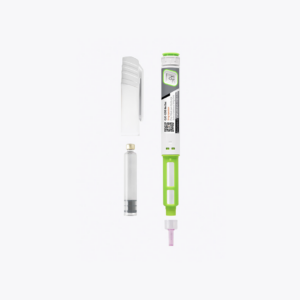
CJC-1295
CJC-1295 is a GHRH analogue, a synthetic peptide that binds to the GHRH receptor and stimulates pituitary GH release.
What distinguishes CJC-1295 from native GHRH is its extended half-life (the time it remains active in the body).
Native GHRH is broken down within minutes of release.
CJC-1295 without DAC (drug affinity complex) has a significantly extended duration of action, allowing it to sustain GHRH receptor signalling over a longer period and produce a more prolonged stimulatory effect on pituitary GH release.
Research into CJC-1295 examines its effects on the GH/IGF-1 axis (the signalling relationship between growth hormone and insulin-like growth factor 1) and its downstream interactions with metabolic and tissue-related pathways.
2. GHRPs: Working Through a Different Receptor Entirely
The second class are GHRPs (growth hormone releasing peptides in the strict sense), which work through an entirely different mechanism.
GHRPs are ghrelin mimetics, meaning they bind to the ghrelin receptor (also called the GHS-R1a, or growth hormone secretagogue receptor) rather than the GHRH receptor.
Ghrelin is an endogenous peptide hormone produced primarily in the stomach that plays a role in appetite regulation and growth hormone secretion.
When GHRPs bind to the ghrelin receptor on pituitary cells, they stimulate GH release through this separate receptor pathway, independently of the GHRH pathway.
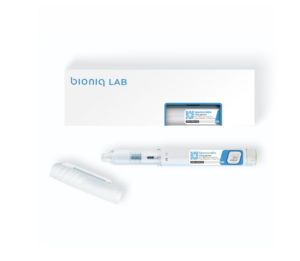
Ipamorelin
Ipamorelin is a GHRP studied for its selectivity at the ghrelin receptor.
Research has examined its role in stimulating pituitary GH release with minimal off-target effects on other hormones such as cortisol (the stress hormone) and prolactin (a hormone involved in reproductive function), which are influenced by some other GHRPs.
This selectivity profile has made Ipamorelin one of the more studied compounds in this class.
Why CJC-1295 and Ipamorelin Are Often Studied Together
As GHRH analogues and GHRPs work through different receptors and different pathways, combining them is proposed to produce an additive or synergistic effect on pituitary GH release.
CJC-1295 activates the GHRH receptor, amplifying the pituitary’s responsiveness to GH-stimulating signals. Ipamorelin activates the ghrelin receptor, providing a separate and complementary stimulus through a distinct pathway.
Research has examined this combination for its effects on the pattern and magnitude of GH release, with interest in whether the dual-receptor approach produces a more physiologically resonant pulse of GH secretion than either compound achieves alone.
The Key Difference: The Negative Feedback Loop
This is the mechanistic detail that most clearly separates growth hormone releasing peptides from exogenous GH administration, and it is the reason the research community has sustained interest in secretagogues as a distinct category.
When exogenous GH (growth hormone administered from outside the body) is introduced, it bypasses the pituitary entirely and enters circulation directly.
The body’s hypothalamus detects elevated GH levels and responds by increasing somatostatin release and reducing GHRH output, suppressing the pituitary’s own GH production.
Over time, this can lead to downregulation of the pituitary’s natural secretory capacity.
Growth hormone releasing peptides do not bypass this system.
They stimulate the pituitary to release GH through its own regulatory machinery, preserving the negative feedback loop (the system through which the body monitors hormone levels and adjusts production accordingly).
If GH levels rise beyond what the body’s feedback mechanisms consider appropriate, somatostatin is released and the signal is dampened. The body retains control.
This is the primary mechanistic argument for studying secretagogues as a research category distinct from exogenous GH administration.
Where the Evidence Currently Stands
Research into growth hormone releasing peptides spans several decades, with compounds like Ipamorelin and CJC-1295 having relatively well-characterised pharmacological profiles in preclinical and some clinical settings.
A 2006 randomised control trial demonstrated that CJC-1295 produced sustained elevations in GH and IGF-1 levels in healthy adults across a dose-ranging study, with a pharmacokinetic profile consistent with its extended half-life design.
As with most research peptides, the evidence base is stronger in preclinical settings than in large-scale human clinical trials.
Long-term safety data in human populations remains limited, and both compounds are research-stage.
Curious About Peptide Research?
Understanding the mechanistic differences between growth hormone releasing peptides and growth hormone itself is a useful foundation for anyone navigating this area of research.
The DN Lab Research team offers one-to-one consultations with peptide specialists who can help you understand the research and what is relevant to your interests.
Schedule your consultation today!
Frequently Asked Questions (FAQs)
What is the difference between growth hormone and growth hormone releasing peptides?
Growth hormone is a 191-amino-acid protein produced by the pituitary gland. Growth hormone releasing peptides are compounds studied for their ability to stimulate the pituitary to produce and release its own growth hormone through existing hormonal pathways. Growth hormone releasing peptides are not growth hormone. They interact with the regulatory system that controls growth hormone production rather than substituting for the hormone itself.
What is the difference between a GHRH analogue and a GHRP?
GHRH analogues (such as CJC-1295) mimic the body’s own growth hormone-releasing hormone and bind to the GHRH receptor on pituitary cells. GHRPs (such as Ipamorelin) are ghrelin mimetics that bind to the ghrelin receptor (GHS-R1a), a separate receptor on pituitary cells. Both stimulate growth hormone release, but they do so through different pathways, which is why they are often studied in combination.
What is the negative feedback loop?
The negative feedback loop is the mechanism through which the body monitors its own hormone levels and adjusts production accordingly. When growth hormone levels rise, the hypothalamus increases somatostatin (which inhibits GH release) and reduces GHRH output, dampening further secretion. Growth hormone releasing peptides work within this system, meaning the body retains regulatory control. Exogenous growth hormone bypasses the pituitary entirely and can suppress the body’s own GH production over time.
What is IGF-1 and how does it relate to growth hormone?
IGF-1 (insulin-like growth factor 1) is a protein produced primarily by the liver in response to growth hormone stimulation. It mediates many of growth hormone’s downstream effects on cell growth, tissue repair, and metabolic function. IGF-1 levels are commonly used in research as a measurable marker of growth hormone axis activity, making it a useful indicator in studies examining the effects of growth hormone releasing peptides.
Why are CJC-1295 and Ipamorelin often studied together?
CJC-1295 and Ipamorelin work through different receptors (GHRH receptor and ghrelin receptor respectively), meaning they provide complementary stimuli to the pituitary’s growth hormone-secreting cells. Research has examined whether this dual-receptor approach produces a more pronounced and physiologically resonant pattern of GH release than either compound achieves when studied alone. The combination is one of the most commonly referenced pairings in growth hormone secretagogue research.
Are growth hormone releasing peptides safe to research with?
Both CJC-1295 and Ipamorelin have relatively well-characterised pharmacological profiles compared to many research peptides, with Ipamorelin in particular noted for its selective receptor activity and minimal effects on cortisol and prolactin in the existing research. As with all research-stage compounds, long-term human safety data remains limited. Professional consultation before beginning any protocol is strongly advisable.
Written by Elizabeth Tito, BSc Genetics, MPH
Elizabeth is a science and medical writer specialising in peptide science, longevity medicine, mitochondrial health, metabolic optimisation and regenerative health research. With a BSc in Genetics and a Master’s in Public Health, she combines a strong scientific foundation with experience translating complex biomedical research into clear, clinically informed education for the Peptide Therapy and longevity medicine space. Her work is centred on interpreting emerging peptide, metabolic and longevity research with scientific accuracy, clinical awareness and a clear understanding of how these therapies are being discussed and applied in modern health optimisation.