
Epitalon: 7 Benefits for Anti-Ageing and Longevity
Among the compounds generating serious interest in longevity science, Epitalon stands out for its depth of research and the specificity of its mechanism.
This synthetic tetrapeptide, composed of the amino acid sequence Alanine, Glutamic acid, Aspartic acid, and Glycine, was developed as a structural analogue of a peptide naturally produced by the pineal gland.
Decades of research, much of it originating from the St. Petersburg Institute of Bioregulation and Gerontology, have positioned Epitalon as one of the most studied bioregulatory peptides in the context of human ageing.
What Is Epitalon and How Was It Developed?
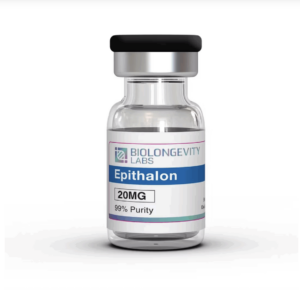
The pineal gland, a small, pine-cone-shaped endocrine structure situated deep within the brain, plays a surprisingly broad role in human physiology.
Beyond its well-known involvement in melatonin secretion and sleep regulation, the pineal gland produces a range of bioactive peptides that influence immune function, hormonal balance, and cellular health.
As the body ages, pineal output declines, and with it, the natural production of these regulatory compounds.
Professor Vladimir Khavinson and his research team developed Epitalon as a synthetic version of one such pineal peptide.
Their aim was to explore whether restoring this peptide signal could support healthy cellular function in ageing organisms. What followed was one of the most sustained research programmes in bioregulatory peptide science, spanning animal experiments, cell culture studies, and early-stage human trials.
Epitalon‘s defining characteristic is its ability to stimulate telomerase the enzyme responsible for maintaining the protective structures at the ends of chromosomes known as telomeres.
This single property underpins much of the scientific interest surrounding Epitalon and its potential role in cellular longevity.
The Science of Epitalon: Telomeres, Telomerase, and Cellular Ageing
To understand why Epitalon matters, it helps to understand telomere biology.
Every time a cell divides, the telomeres at the ends of its chromosomes become slightly shorter. Over time, telomeres reach a critically short length, at which point the cell can no longer divide accurately and enters a state called cellular senescence.
Senescent cells stop performing their normal functions and begin releasing inflammatory signals that accelerate tissue deterioration and age-related decline.
Telomerase is the enzyme that rebuilds telomere sequences, partially offsetting this shortening process.
In most adult somatic cells, telomerase activity is negligible which is why telomere attrition is considered one of the core hallmarks of biological ageing.
A study (Khavinson et al., 2003) demonstrated that Epitalon induced telomerase activity and promoted telomere elongation in human somatic cells – a finding with significant implications for our understanding of how bioregulatory peptides may influence the ageing process at its most fundamental level.
7 Benefits of Epitalon (Supported by Scientific Research)
The research into Epitalon extends well beyond telomere biology.
The following 7 areas represent the most consistently documented potential benefits across peer-reviewed literature.
1. Keeping Cells Younger for Longer
Telomere shortening is widely recognised as a primary driver of biological ageing. Each cell division chips away at telomere length, and once that length falls below a critical threshold, the cell’s ability to replicate and repair itself is compromised.
By activating telomerase, Epitalon enables cells to maintain healthier telomere lengths across more divisions.
Animal studies by Khavinson and colleagues observed extended lifespans alongside improvements in general physiological health markers suggesting that telomere maintenance may translate into broader benefits for the ageing organism.
2. Protecting Your Cells From Everyday Damage
Oxidative stress is one of the key mechanisms through which cells age and deteriorate.
Free radicals (unstable molecules produced through normal metabolic processes and environmental exposures) damage cellular structures including DNA, proteins, and cell membranes. Over time, this damage accumulates and accelerates the ageing process.
Research has indicated that Epitalon may reduce markers of oxidative stress within cells.
This antioxidant activity works in parallel with Epitalon‘s telomere-protective properties since oxidative damage is itself a major contributor to telomere shortening, addressing both pathways simultaneously may offer a more comprehensive approach to cellular protection.
3. Immune Resilience and Age-Related Immune Decline
The gradual decline of immune function with age, referred to as immunosenescence, leaves the body increasingly vulnerable to infection, inflammation, and disease.
Research examining the role of the Ala-Glu-Asp-Gly peptide sequence in modulating immune response during ageing, finding that this sequence, which forms Epitalon, plays a role in regulating interferon gamma, a cytokine central to immune defence.
Epitalon has also been studied alongside Thymalin, a thymus-derived peptide, for combined effects on immune resilience.
Together, the two peptides are thought to address ageing on both a cellular and systemic level.
4. Sleep Quality and Circadian Rhythm Support
Given Epitalon‘s structural relationship to the pineal gland, its influence on sleep regulation is among the most biologically intuitive of its proposed benefits.
The pineal gland governs the body’s circadian rhythm through melatonin secretion and as pineal function declines with age, sleep quality typically deteriorates alongside it.
Research by Goncharova et al. (2001) examined Epitalon‘s regulatory influence on melatonin production in primates, demonstrating a meaningful modulating effect on hormonal output from the pineal gland.
Poor sleep and declining melatonin are both independently associated with accelerated biological ageing making this one of the more practically significant areas of Epitalon‘s research profile.
5. Cognitive Support and Brain Health
Cognitive decline is one of the most significant concerns associated with ageing. The mechanisms believed to contribute to this decline; accumulated oxidative damage in neural tissue, progressive cellular senescence, disrupted sleep, and reduced hormonal signalling, are all areas in which Epitalon has demonstrated some degree of biological activity.
Khavinson’s comprehensive review, outlined the broader neuroprotective potential of pineal bioregulatory peptides.
While specific human clinical data on Epitalon and cognition remains limited, the mechanistic rationale rooted in reduced senescence and improved cellular health is well-supported by the existing literature.
6. Tissue Repair and Physical Regeneration
Healthy, functionally active cells are the foundation of effective tissue repair. By slowing the accumulation of senescent cells and preserving telomere integrity, Epitalon supports the body’s capacity to regenerate and maintain tissue function across a range of systems.
This regenerative potential is amplified when Epitalon is studied alongside growth hormone secretagogues such as GHRP-2 or CJC-1295.
While Epitalon addresses cellular longevity, CJC-1295 stimulates growth hormone release creating a complementary research stack that targets both the preservation and active regeneration of tissue.
7. Hormonal and Metabolic Regulation
The pineal gland sits at the intersection of the nervous and endocrine systems, influencing a broad range of hormonal processes.
Epitalon, as a structural analogue of a natural pineal peptide, may help support this regulatory function, particularly as natural pineal output diminishes with age.
Research further highlights how pineal peptides, including Epitalon, may contribute to longer, healthier lives through hormonal and metabolic pathways.
The neuroendocrine system’s role in ageing is well-established, and Epitalon‘s capacity to support this system represents one of its broader areas of research interest.
Epitalon vs. FOXO4-DRI: Two Different Approaches to Cellular Ageing
Both Epitalon and FOXO4-DRI are studied in the context of cellular ageing, but the two peptides operate through fundamentally different mechanisms and address different stages of the ageing process.
Epitalon works preventatively. By activating telomerase and supporting telomere length, Epitalon helps slow the rate at which cells become senescent, reducing the accumulation of dysfunctional cells before it becomes problematic.
FOXO4-DRI takes a different approach. As a senolytic peptide, FOXO4-DRI targets cells that have already entered senescence and induces their programmed removal through apoptosis.
Research by Huang et al. (2021) demonstrated that FOXO4-DRI achieved this by disrupting the FOXO4-p53 interaction that allows senescent cells to resist cell death.
Together, these two mechanisms, slowing senescence accumulation with Epitalon and clearing existing senescent cells with FOXO4-DRI, represent complementary strategies in the broader field of senotherapeutics. Whether combining both approaches offers meaningful benefits remains an active area of investigation.
Common Epitalon Research Stacks
In research settings, Epitalon is frequently studied alongside other peptides to explore whether combining compounds with complementary mechanisms produces broader effects. The following stacks appear most regularly across the research literature.
- Epitalon + Thymalin: Thymalin is a thymus-derived peptide that supports immune system function. Paired with Epitalon‘s telomere-maintenance properties, this combination targets ageing at both the cellular and systemic immune level addressing two of the most significant biological drivers of age-related decline.
- Epitalon + GHRP-2 / CJC-1295: While Epitalon supports cellular longevity through telomerase activation, GHRP-2 and CJC-1295 drive growth hormone secretion to support active tissue regeneration and metabolic health. This combination pairs long-term cellular preservation with more immediate physiological repair.
- Epitalon + Resveratrol / Quercetin: Resveratrol and Quercetin activate SIRT1 and AMPK – pathways involved in cellular energy regulation and antioxidant defence. Combined with Epitalon‘s telomere-protective effects, this stack targets oxidative stress and cellular energy metabolism alongside telomere maintenance.
The above information is provided for research purposes only. Any research protocol involving multiple compounds should always be reviewed by a qualified professional.
Does Epitalon Have Any Side Effects?
Epitalon is broadly considered well-tolerated across the studies published to date.
Long-term safety data in human subjects remains limited, however, and ongoing research continues to build the evidence base. The following side effects have been noted in some individuals across the reviewed literature.
- Mild gastrointestinal disturbance, including nausea or stomach discomfort.
- Transient headaches, particularly in the early stages of use.
- Fatigue or drowsiness in some subjects.
- Hormonal fluctuations, reflecting Epitalon‘s activity on the pineal-neuroendocrine axis.
- Rare allergic responses in sensitive individuals.
These effects are not universal, and many subjects in the reviewed studies reported no adverse reactions. As with all research-stage compounds, professional consultation before use is strongly advisable.
Want to Explore Epitalon Further?
Epitalon sits at the forefront of longevity research and understanding whether it belongs in your personal health or research protocol requires more than reading a blog. It requires expert guidance tailored to your specific goals, history, and biology.
The DN Lab Research team offers one-to-one consultations with peptide specialists who can walk you through the science, help you understand the research, and support you in building a tailored, individual protocol that is right for you.
Book Your 1:1 Peptide Consultation Today
Frequently Asked Questions About Epitalon
What is Epitalon and what is it used for?
Epitalon is a synthetic tetrapeptide developed as an analogue of a naturally occurring pineal gland peptide. Research has explored its effects across a broad range of biological systems, with particular focus on telomere maintenance, immune function, sleep regulation, antioxidant activity, and metabolic balance.
How does Epitalon support the ageing process?
Epitalon‘s primary mechanism involves stimulating telomerase, the enzyme that rebuilds telomere sequences at the ends of chromosomes. By helping maintain telomere length, Epitalon supports the continued normal function of cells across more divisions, potentially slowing the accumulation of senescent cells that drive age-related decline.
Is Epitalon the same as Epithalon?
Yes. Epitalon, Epithalon, and Epitalone are all names used to refer to the same tetrapeptide – Ala-Glu-Asp-Gly. The variation in spelling reflects differences in transliteration from Russian-language research literature and regional naming conventions.
What is the connection between Epitalon and the pineal gland?
Epitalon was synthesised to replicate a peptide naturally produced by the pineal gland. The pineal gland produces melatonin and a range of other bioactive compounds that regulate circadian rhythms, hormonal balance, and aspects of immune function. As pineal output declines with age, researchers have explored whether supplementing with Epitalon can help restore some of this regulatory signalling.
Can Epitalon be used alongside other peptides?
In research settings, Epitalon is often studied in combination with compounds such as Thymalin, GHRP-2, and CJC-1295. These combinations explore whether complementary mechanisms, telomere maintenance, immune support, and growth hormone stimulation, produce broader physiological effects.
How does Epitalon differ from senolytic peptides like FOXO4-DRI?
Epitalon and FOXO4-DRI address different stages of cellular ageing. Epitalon aims to slow the accumulation of senescent cells by maintaining telomere integrity. FOXO4-DRI, by contrast, is a senolytic compound, meaning it selectively eliminates cells that have already become senescent. The two approaches can be viewed as complementary rather than competing.
What does the research say about Epitalon’s long-term safety?
Existing studies suggest Epitalon is generally well-tolerated, with a relatively modest side effect profile in the populations studied. Long-term human safety data remains limited, however, and the research community continues to call for larger, more rigorous clinical trials to fully characterise Epitalon‘s safety and therapeutic potential.
Written by Elizabeth Sogeke, BSc Genetics, MPH
Elizabeth is a science and medical writer with a background in Genetics and Public Health. She holds a BSc in Genetics and a Master’s in Public Health (MPH), with a focus on mitochondrial science, metabolic health, and healthy aging. Over the past several years, she has worked with leading peptide research laboratories and functional medicine clinics, creating trusted, clinically-informed content that bridges the latest developments in peptide and longevity research with real-world applications.