
Why GHK-Cu Injections Sometimes Sting and 5 Ways to Reduce Discomfort
GHK-Cu (Copper Tripeptide-1) is one of the most respected peptides in regenerative research.
Its ability to support wound healing, improve skin quality, promote angiogenesis, and influence gene expression repair has made it a significant compound across both aesthetic and therapeutic research contexts.
Those using GHK-Cu in subcutaneous injection form may experience injection site discomfort.
A brief stinging or burning sensation at the injection site is a commonly reported experience with GHK-Cu.
Some also report mild localised redness, small lumps, or temporary irritation. For those unfamiliar with why this happens, the discomfort can feel alarming and lead to premature discontinuation of an otherwise well-designed protocol.
The good news is that this reaction is almost always a matter of chemistry and technique rather than a sign that anything has gone wrong.
What Is GHK-Cu?
GHK-Cu is a naturally occurring copper-binding tripeptide first identified in human plasma in 1973 by Loren Pickart.
The peptide consists of three amino acids: glycine, histidine, and lysine, bound to a copper ion.
GHK-Cu is found naturally in human plasma, saliva, and urine, and its concentration in plasma declines significantly with age, from approximately 200 ng/ml at age 20 to around 80 ng/ml by age 60.
The research profile behind GHK-Cu is exceptionally broad. Studies have documented its capacity to stimulate collagen and glycosaminoglycan synthesis, accelerate wound healing, promote angiogenesis, exert antioxidant and anti-inflammatory effects, and modulate the expression of genes involved in tissue repair and regeneration.
A comprehensive review by Pickart, Vasquez-Soltero, and Margolina (2015), documented GHK-Cu’s ability to reset gene expression patterns in aged or damaged tissue toward a more regenerative state, affecting over 4,000 human genes.
It is precisely because GHK-Cu‘s research profile is so compelling that injection site discomfort is worth addressing directly.
A peptide with this breadth of documented activity should not be abandoned because of a manageable and explainable side effect.
Why Does GHK-Cu Sting on Injection?
The stinging associated with GHK-Cu injection is not random and it is not a sign that the peptide is degraded or contaminated. It has a clear and well-understood chemical basis.
GHK-Cu is a small, positively charged molecule. When introduced into subcutaneous tissue, this charge can create a temporary pH imbalance at the injection site.
The tissue surrounding the injection point, which maintains a tightly regulated pH environment, responds to this disruption with the brief inflammatory signals that produce the stinging or burning sensation.
This is a localised and transient chemical response, not an allergic reaction and not a sign of peptide instability.
This type of reaction is not unique to GHK-Cu. It is seen across a range of peptides and pharmaceutical compounds that carry ionic or charged components, particularly when those compounds are injected into sensitive or low-fat tissue without adequate buffering.
The reaction is more pronounced under certain specific conditions.
Conditions That Increase Injection Site Discomfort
- Higher concentrations: At higher concentrations of GHK-Cu, the concentration of positively charged GHK-Cu molecules at the injection site increases, amplifying the localised pH disturbance and the associated discomfort.
2. Rapid injection: Delivering the solution quickly deposits a concentrated volume of the compound into a small area of tissue all at once, giving the surrounding tissue less time to equilibrate with the pH shift.
3. Injection into sensitive or low-fat tissue: Areas such as the abdomen, inner thigh, or other sites with minimal subcutaneous fat have less tissue cushioning and a higher density of sensory nerve endings, making pH-related discomfort more noticeable.
4. Insufficient buffering: Reconstituting GHK-Cu without adequate bacteriostatic saline, or using a solvent that does not adequately buffer the solution’s pH, leaves the compound in a form that is more likely to cause tissue irritation on delivery.
5. Repeated injection at the same site: Repeatedly injecting into the same location causes cumulative local irritation, increasing sensitivity and the likelihood of lumps, redness, or prolonged discomfort at that site.
5 Techniques to Reduce GHK-Cu Injection Discomfort
The following five techniques are practical, evidence-informed adjustments to injection method and preparation that reduce GHK-Cu injection discomfort without altering the peptide’s biological activity or therapeutic potential.
1. Dilute With Bacteriostatic Water
If using GHK-Cu at higher concentrations, diluting slightly with bacteriostatic water is one of the most effective ways to reduce injection site discomfort.
Bacteriostatic water is pH-neutral and helps buffer the charged GHK-Cu molecule, reducing the localised pH disturbance at the injection site.
This does not reduce the total amount of GHK-Cu delivered; it simply distributes the same dose across a slightly larger volume of solvent, softening the immediate chemical impact on surrounding tissue.
2. Inject Slowly
The speed of delivery matters considerably with GHK-Cu. Injecting slowly, over 20 to 30 seconds rather than in a single rapid push, allows the surrounding subcutaneous tissue more time to equilibrate as the solution is introduced.
A slower delivery rate reduces the peak concentration of GHK-Cu molecules at the injection point at any given moment, softening the pH disruption and the discomfort associated with it.
This is one of the simplest and most immediately impactful adjustments to injection technique.
3. Warm the Vial Before Use
Cold solutions cause localised vasoconstriction and heighten sensitivity at the injection site, making any discomfort more pronounced.
Gently warming the GHK-Cu vial by holding it in the palm of the hand for one to two minutes before drawing the solution brings the liquid closer to body temperature. This reduces the thermal shock to the tissue on delivery and can meaningfully reduce the stinging sensation.
It is important to warm the vial using body heat only. External heat sources such as warm water, heating pads, or direct sunlight should never be used, as elevated temperatures can degrade the peptide and compromise its biological activity.
4. Rotate Injection Sites Consistently
Injecting repeatedly into the same location causes cumulative tissue irritation. The subcutaneous tissue at that site becomes sensitised, and subsequent injections into the same area are progressively more uncomfortable.
Maintaining a consistent rotation schedule across different injection sites, including the outer thighs, upper abdomen, and flanks, allows each site adequate time to recover between injections.
Systematic site rotation also reduces the risk of localised lipodystrophy (changes in fat distribution) and the development of persistent lumps or subcutaneous nodules at frequently used injection points.
5. Choose Injection Sites With Adequate Subcutaneous Tissue
Injection sites with minimal subcutaneous fat, such as the inner thigh, the lower abdomen in leaner individuals, or areas close to bony prominences, offer less tissue cushioning between the needle and sensory nerve endings.
Choosing sites with a reasonable depth of subcutaneous tissue, and ensuring adequate injection depth into the subcutaneous layer rather than intradermally or intramuscularly, reduces direct nerve stimulation and the associated discomfort.
For most individuals, the outer thigh and the lateral abdomen provide the most suitable subcutaneous tissue depth for GHK-Cu injection with the least discomfort.
Why Managing Injection Discomfort Matters for Protocol Outcomes
Injection site discomfort with GHK-Cu is a frequently cited reason for protocol discontinuation.
Researchers and users exploring GHK-Cu for skin regeneration, post-procedural healing, or longer-term tissue repair often stop their protocol prematurely when discomfort becomes a recurring experience. The irony is that in most cases, the problem is technique rather than the peptide itself.
The therapeutic effects of GHK-Cu are cumulative. Collagen synthesis, angiogenesis, and gene expression repair do not occur after a single dose.
They develop over weeks and months of consistent application. Disrupting a protocol due to avoidable injection discomfort means losing the cumulative biological benefit that consistent administration was building toward.
A review of GHK-Cu‘s wound healing and skin regeneration research by Pickart and Margolina (2018), highlighted the importance of sustained application for achieving the full range of GHK-Cu‘s documented biological effects.
The study’s findings reinforce why protocol consistency is a prerequisite for the outcomes the research demonstrates.
Is There A Bigger Issue?
While the stinging and irritation associated with GHK-Cu injection is almost always benign and technique-related, it is useful to distinguish between normal injection site reactions and signs that warrant closer attention.
Normal and expected reactions include a brief stinging or burning sensation during or immediately after injection, mild redness or warmth at the injection site lasting a few minutes, and small temporary lumps that resolve within 30 to 60 minutes as the solution disperses through subcutaneous tissue.
Reactions that warrant attention include persistent swelling or redness lasting more than 24 hours, significant pain beyond the initial injection moment, the development of hard nodules that do not resolve within a day or two, fever or systemic symptoms following injection, or any sign of infection at the injection site including warmth, pus, or spreading redness.
None of these more significant reactions are characteristic of GHK-Cu‘s normal injection site profile. Their presence would indicate a problem with injection technique, preparation, or in rare cases, individual sensitivity that should prompt a review of the protocol and professional consultation.
Need Guidance on Your GHK-Cu Protocol?
Injection technique is one of the most underestimated variables in a GHK-Cu protocol. Getting it right from the outset protects both comfort and consistency, and consistency is what allows GHK-Cu‘s cumulative biological effects to develop fully.
Whether you are new to GHK-Cu or looking to optimise an existing protocol, working with a specialist ensures you are getting the most from the research.
Schedule a 1:1 consultation with one of our Peptide Therapy experts.
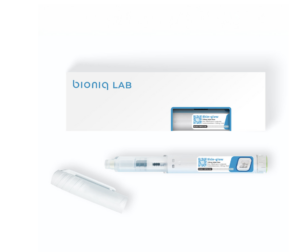
GHK-Cu | 30mg Peptide Pen
Frequently Asked Questions (FAQs)
Is it normal for GHK-Cu to sting when injected?
Yes. A brief stinging or burning sensation at the injection site is a commonly reported and chemically explainable reaction to GHK-Cu injection. It results from the peptide’s positive charge creating a temporary pH disturbance in the surrounding tissue and is not a sign of contamination, degradation, or an allergic response.
Why does GHK-Cu cause injection site reactions?
GHK-Cu is a small, positively charged molecule. When injected subcutaneously, this charge temporarily disrupts the pH balance of the surrounding tissue, triggering a brief localised inflammatory response. This reaction is more pronounced at higher concentrations, with rapid injection, in low-fat areas, and without adequate buffering with bacteriostatic saline.
How long does the stinging from GHK-Cu injection last?
For most people, the stinging sensation resolves within a few minutes of injection. Mild redness or warmth at the site typically clears within 15 to 30 minutes. Small temporary lumps caused by the solution pooling in subcutaneous tissue usually disperse within 30 to 60 minutes. Persistent discomfort beyond this window is not typical and warrants a review of injection technique.
Does diluting GHK-Cu with bacteriostatic water reduce its effectiveness?
No. Diluting GHK-Cu with bacteriostatic water reduces the concentration of the solution but does not alter the total dose delivered. The same amount of GHK-Cu reaches the tissue; it is simply distributed across a slightly larger volume of solvent. Bacteriostatic saline is pH-neutral and does not interact with or degrade the peptide. Dilution adjusts the delivery experience without affecting GHK-Cu‘s biological activity.
Should I stop using GHK-Cu if the injection site stings?
No, not on that basis alone. A brief stinging sensation is a normal and manageable feature of GHK-Cu injection. Discontinuing the protocol because of manageable discomfort means losing the cumulative biological benefits that GHK-Cu builds over weeks and months of consistent use. The appropriate response to injection discomfort is to review and adjust technique, not to stop the protocol. If discomfort is significant or persists, a consultation with a specialist can identify the specific adjustment needed.
What injection sites are best for GHK-Cu to minimise discomfort?
Sites with adequate subcutaneous tissue depth produce the least discomfort. The outer thigh and lateral abdomen are generally the most suitable for GHK-Cu injection in most individuals. Low-fat areas such as the inner thigh, the lower abdomen in leaner individuals, and sites near bony prominences should be avoided where possible as they offer less tissue cushioning and produce more pronounced discomfort.
Written by Elizabeth Tito, BSc Genetics, MPH
Elizabeth is a science and medical writer with a background in Genetics and Public Health. She holds a BSc in Genetics and a Master’s in Public Health (MPH), with a focus on mitochondrial science, metabolic health, and healthy aging. Over the past several years, she has worked with leading peptide research laboratories and functional medicine clinics, creating trusted, clinically-informed content that bridges the latest developments in peptide and longevity research with real-world applications.