
When people first encounter Peptide Therapy research, the format a compound comes in can seem like a practical detail rather than a scientific one.
The route of administration changes where in the body a peptide can reach, how much of it enters circulation, and which biological systems it is positioned to interact with.
The two peptide formats most commonly encountered in research are intranasal delivery (administered via nasal spray) and subcutaneous injection (delivered into the tissue layer just beneath the skin).
Each format has a distinct pharmacokinetic profile (the way a compound moves through the body, how much is absorbed, and how quickly), a distinct set of research applications, and a distinct relationship to the compounds studied through it.
Intranasal delivery typically produces effects within 30 to 60 minutes. The nasal mucosa (the moist lining of the nasal cavity) absorbs the compound relatively quickly, and for peptides targeting the central nervous system, specific nerve pathways provide a relatively direct route toward brain tissue.
Subcutaneous injection acts within 15 to 30 minutes for most compounds, with intravenous delivery producing near-immediate effects.
The subcutaneous route delivers the compound into tissue with a dense blood supply, from which it is absorbed into systemic circulation relatively quickly and consistently.
Neither route produces an instantaneous effect, and onset time is rarely the primary consideration in research design. The more important variable is where the compound eventually ends up within the body.
The brain is protected by the blood-brain barrier, a selective filtering system formed by specialised cells lining the blood vessels of the brain, which limits what can pass from the bloodstream into brain tissue.
Many peptides cannot cross this barrier effectively when delivered systemically.
Intranasal delivery partially bypasses this barrier. Nerves accessible from within the nasal cavity, provide pathways that lead directly toward the central nervous system without requiring compounds to pass through the bloodstream and cross the blood-brain barrier.
Subcutaneous injection does not offer this pathway. Compounds administered subcutaneously enter systemic circulation and are subject to the blood-brain barrier in the same way as any other systemically delivered compound.
For peptides with targets in peripheral tissues, being unable to cross the blood-brain barrier is not a limitation. Whereas for compounds being studied for central nervous system effects, it is a very important advantage.
Intranasal delivery does not require a needle as the compound is administered directly into the nasal cavity through a spray device.
This makes it one of the more accessible peptide formats from a practical standpoint.
Peptide pens and nasal sprays designed for this purpose are straightforward to use with appropriate research guidance.
Subcutaneous injection, however, does require a needle. Subcutaneous needles have a fine gauge and the injection is made into the tissue layer just beneath the skin rather than into muscle or a vein.
Most people who research subcutaneous peptides report that the process is straightforward once familiarity is established.
Nevertheless, the needle requirement is a practical distinction worth noting when comparing the two formats.
Both intranasal and subcutaneous peptide formats require refrigeration.
Peptides are sensitive to temperature, light, and humidity, and improper storage can degrade the compound before it is used.
In terms of shelf life, nasal spray formulations (which are typically supplied in solution) can last for several months when stored correctly and remain sealed.
Subcutaneous peptide pens and cartridges similarly require refrigeration and have defined shelf lives, but once mixed or opened, the window for use becomes shorter.
Specific storage guidance varies by compound and formulation, and should always be followed as supplied.
Systemic bioavailability (the proportion of a compound that reaches circulation in an active form) differs considerably between the two formats.
Intranasal delivery typically results in 2 to 40 percent of the administered compound reaching systemic circulation, and the fraction varies considerably between compounds.
Some peptides absorb more efficiently via the nasal mucosa than others.
Subcutaneous injection produces substantially higher systemic bioavailability. For most subcutaneously administered peptides, a large proportion of the compound enters circulation relatively intact.
Intravenous (through a vein) delivery represents the upper end, with near-complete systemic bioavailability.
It is important to understand that higher systemic absorption is not inherently better.
For compounds being studied for central nervous system effects, the ability of intranasal delivery to access brain pathways directly may be more relevant to the research question than the total amount entering systemic circulation.
Its primary research interest centres on neurotrophic signalling and neuroprotective pathways, making intranasal delivery the appropriate format for accessing these central targets.
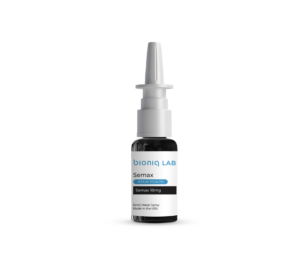
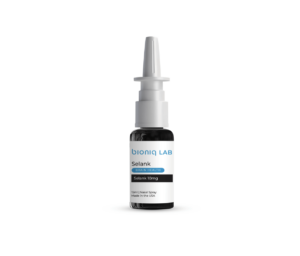
The research focus for subcutaneous peptides centres on systemic biology, including tissue repair, metabolic signalling, hormonal regulation, and cellular function. These are research areas where circulatory delivery to tissues throughout the body is required.
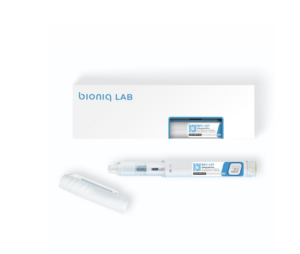
2. GHK-Cu is studied in relation to collagen synthesis pathways and extracellular matrix remodelling (the reorganisation of the structural protein network underlying skin and connective tissue). Injectable formulations are studied for broader systemic tissue support. A 2022 study showed a 40% reduction in reactive oxidative species (waste products of metabolism that damage cells) when mice were treated with GHK-Cu. Overall, markers of aging were also significantly reduced after usage.
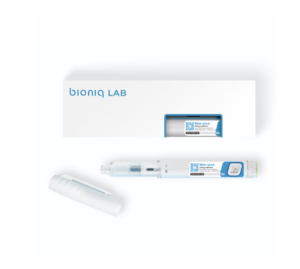
3. CJC-1295 and Ipamorelin are growth hormone secretagogues (compounds studied for their role in stimulating growth hormone release from the pituitary gland) and are consistently studied via subcutaneous injection for their effects on hormonal signalling, metabolic function, and body composition pathways.
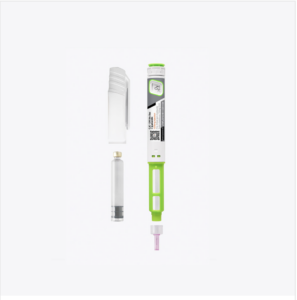
4. Epitalon is studied in relation to telomerase activity and pineal gland function. Subcutaneous delivery is used to reach the systemic targets relevant to this research.
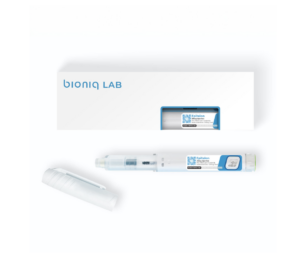
5. MOTS-c is studied for its role in mitochondrial bioenergetic function and AMPK pathway activation. Subcutaneous delivery is used to reach skeletal muscle and systemic metabolic targets.
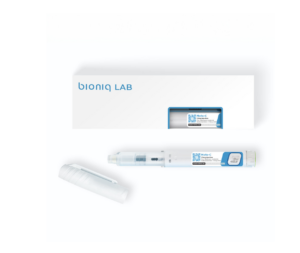
Understanding how peptide formats, routes of administration, and research targets relate to one another is foundational to navigating this field. If you would like tailored guidance to navigating the vast research with Peptide Therapy, our specialists are here to help.
Schedule a 1:1 consultation with a Peptide Therapy Expert
The format determines where in the body a peptide can reach and how much of it enters circulation. In research, the route of administration is selected based on the biological target. A compound being studied for central nervous system effects requires a format that can access brain pathways, while a compound being studied for systemic tissue repair requires consistent circulatory delivery.
The blood-brain barrier is a selective filtering system formed by specialised cells lining the brain’s blood vessels, which regulates what can pass from systemic circulation into brain tissue. Many peptides cannot cross this barrier effectively when delivered systemically, which is why intranasal delivery is studied for brain-acting compounds. The nasal route provides access to the olfactory (sense of smell) and trigeminal (facial sensation and chewing) nerve pathways, which lead toward the central nervous system without requiring passage through the blood-brain barrier.
Lower systemic absorption does not mean lower effectiveness for the research target. Intranasal delivery is used for compounds where central nervous system access is the priority. The nasal route’s ability to reach brain pathways directly is the relevant advantage in relation to its desired function and target. Comparing absorption percentages between the two formats without accounting for their different research targets does not reflect how these formats are evaluated in the literature.
Yes. Some peptides have been studied through more than one route, typically because different research questions are being asked. When this happens, the route reflects the specific biological target being investigated in that study. BPC-157 is an example, studied orally for gastrointestinal mucosal research and subcutaneously for systemic tissue repair pathways.
Bioavailability refers to the proportion of a compound that reaches systemic circulation in an active form following administration. Subcutaneous injection typically produces high systemic bioavailability for most peptides. Intranasal delivery produces lower systemic bioavailability, with 2 to 40 percent reaching circulation depending on the compound. For brain-acting peptides, however, despite their lower bioavailability, direct access to the central nervous system is the primary area of interest.
Both intranasal and subcutaneous peptide formats require refrigerated storage. Peptides are sensitive to temperature, light, and humidity, and degradation can occur if storage conditions are not maintained. Nasal spray formulations tend to have a longer shelf life when sealed and stored correctly. Once opened or mixed, the window for use becomes shorter. Specific guidance varies by compound and should always be followed as provided.
Written by Elizabeth Sogeke, BSc Genetics, MPH
Elizabeth is a science and medical writer specialising in peptide science, longevity medicine, mitochondrial health, metabolic optimisation and regenerative health research. With a BSc in Genetics and a Master’s in Public Health, she combines a strong scientific foundation with experience translating complex biomedical research into clear, clinically informed education for the Peptide Therapy and longevity medicine space. Her work is centred on interpreting emerging peptide, metabolic and longevity research with scientific accuracy, clinical awareness and a clear understanding of how these therapies are being discussed and applied in modern health optimisation.